

EDVORA: getting every student to Japan on time
Training centres in Indonesia (LPK) prepare thousands of people to work in Japan. Most of them run on spreadsheets and chat groups, and one missing document can delay a departure. I founded EDVORA and designed it from the first interview to a launch-ready product.
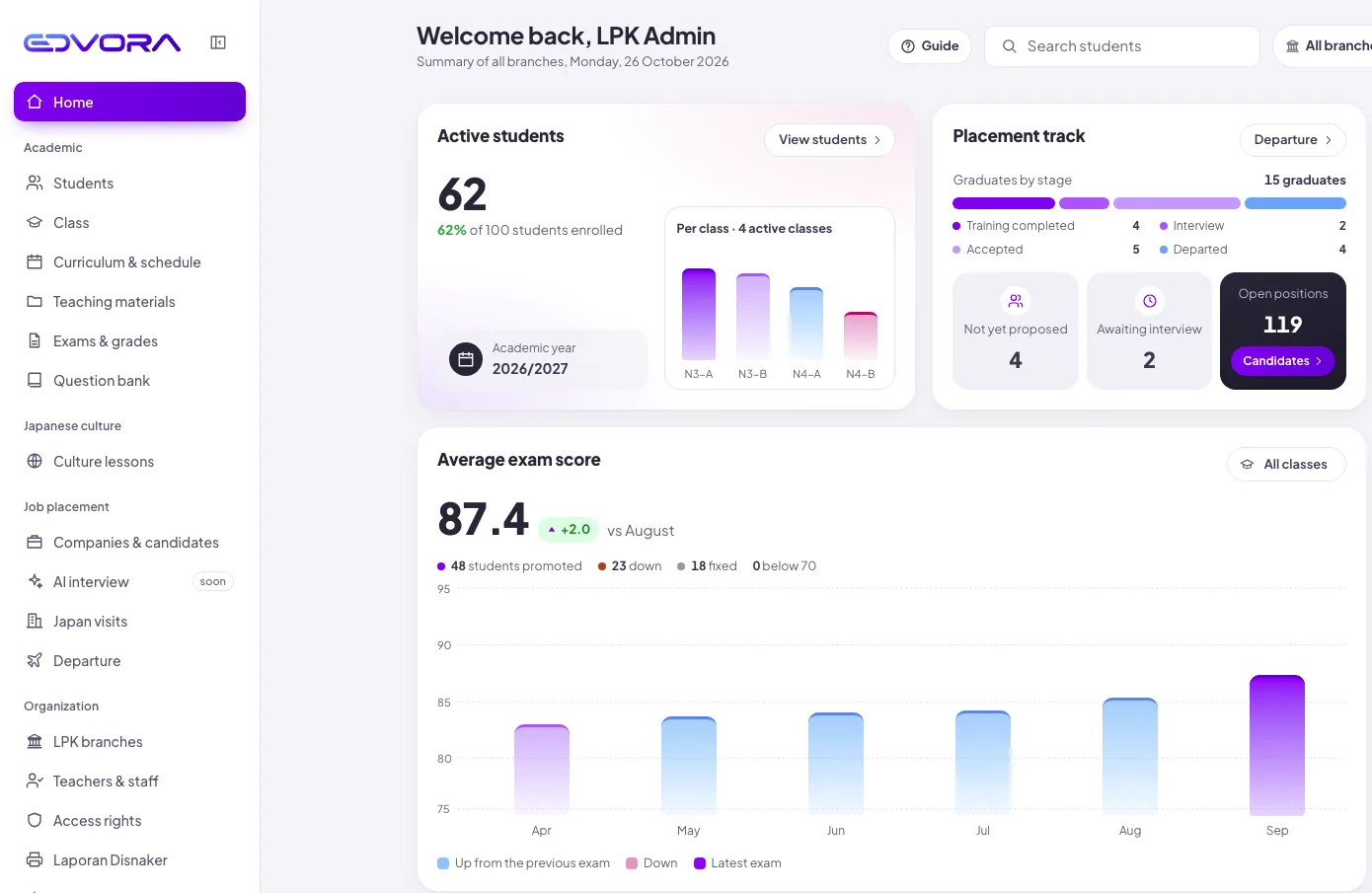
One missing document can delay a whole departure
Every student going to Japan moves through the same long journey: registration, language classes, exams, documents, placement and finally departure. Each step has its own paperwork and deadlines.
Training centres track all of this in spreadsheets and chat groups. Staff spend their days chasing students for passports, medical checks and visas, and owners have no clear view of what is late across their branches.
Mapping the market before drawing a screen
I didn't want to design for a guess. I mapped and scored the official sending organisations to understand who they are, how big they are and which ones feel this pain the most.
Every official sending organisation, scored on size and fit.
The scoring showed which centres to design for first.
Plans shaped around how centres actually grow.
The most important finding was simple: documents and deadlines cause more stress than anything else. That decided the core of the product.
One place for the whole student journey
EDVORA follows each student from the day they register to the day they fly. Every stage lives in one place, and the departure stage is the heart of the product.
Every required document per student, with status and due dates, and reminders before anything becomes late.
Owners see every branch in one dashboard, so problems show up before they delay a flight.
Centres pay by virtual account or QRIS, the payment methods they already use.
A multi-tenant setup, so each centre and branch keeps its own data.
Making the checklist the main character
Staff don't need another table. They need to know who to call today. So each student gets one clear checklist with a status for every document, and the dashboard rolls these up into simple numbers: ready, due this week and late.
- PassportVerified
- Medical checkVerified
- Certificate of EligibilityReceived
- Japanese test (JLPT N4)Passed
- VisaApproved
- Flight ticketDue in 3 days
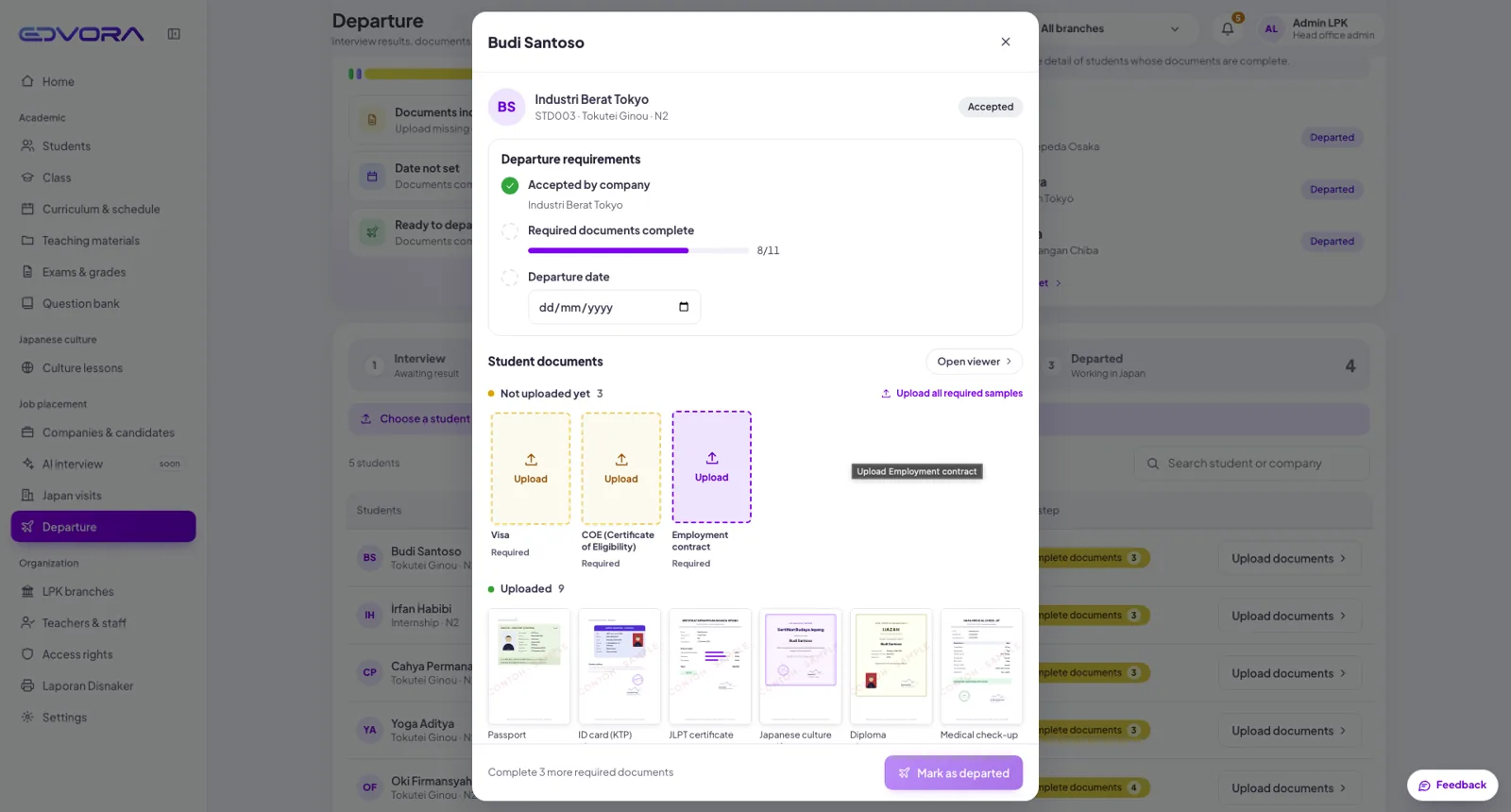
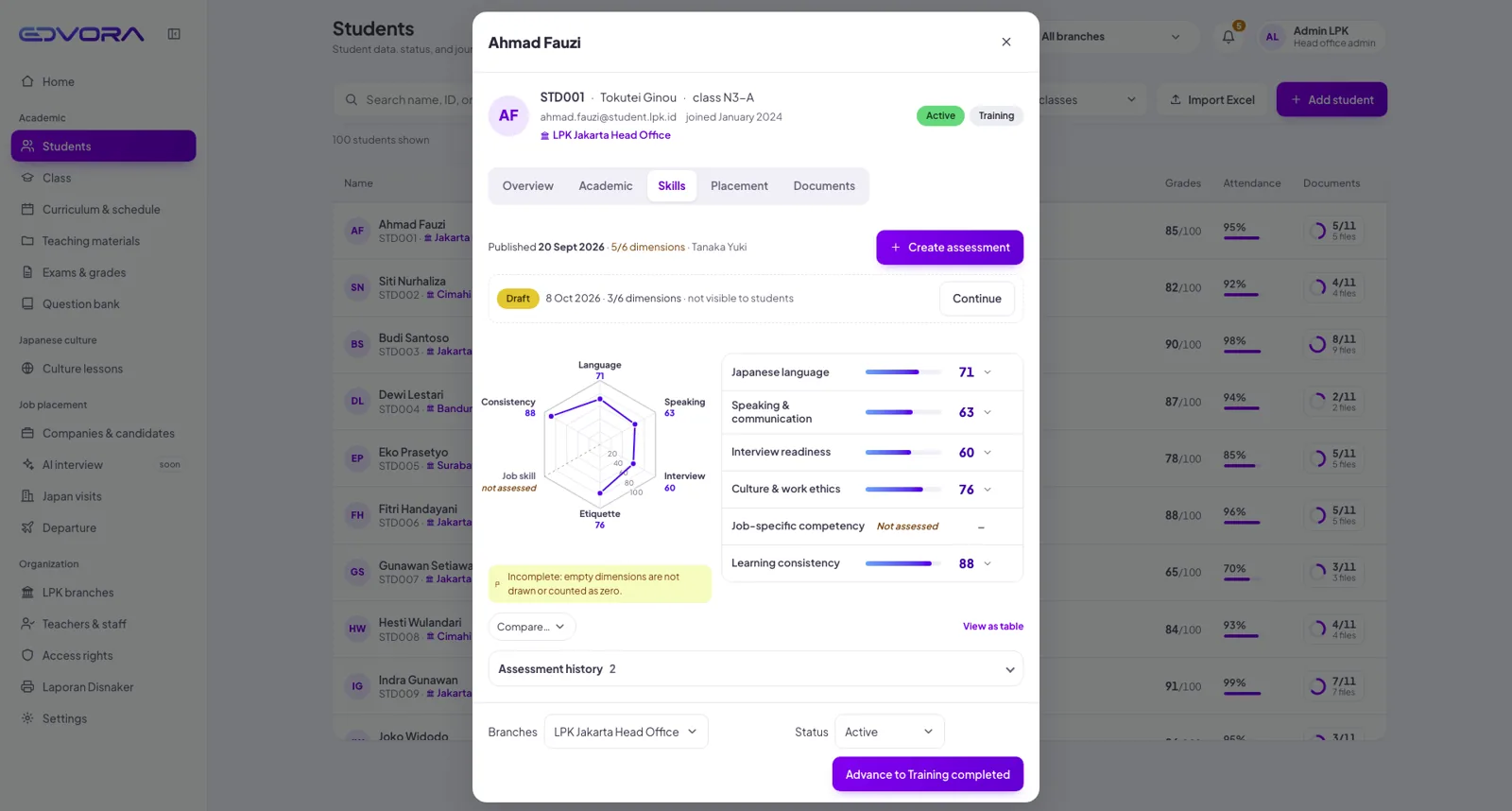
I wrote the technical specification and built an interactive prototype first, so the CTO and I could test the flows before any code was written. Then I worked with engineering through five delivery phases.
From an idea to a launch-ready product
Shipped with Next.js, React, Prisma and MySQL.
All passing, so the product is ready for real customers.
Me, a CTO and a CMO, plus a ready sales pipeline, outreach messages and video scripts.
EDVORA is now in early customer outreach. The next step is onboarding the first centres and measuring how much time staff save and how many departures leave on schedule.
Designing the business, not only the screens
Founding a product made me own decisions I usually hand to others: who to sell to, how to price, what to build first. It made me a better product designer, because every screen now has to earn its place.
It also taught me to design with engineers from day one. Writing the spec myself meant fewer surprises, and the 319 tests mean the design we agreed on is the design that ships.
The full case study, page by page
Research, information architecture, brand, UI system and the key decisions, page by page. Tap a page to read it full size.